
…that the much used exercises #1 through #8, in the pedagogical classic, “Progressive Steps to Syncopation” by Ted Reed, can all be broken down to four tiny 1- beat rhythmic ideas?
FOUR TINY 1-BEAT IDEAS!
As a student of the great drummer-teacher Alan Dawson, I was required to work through those exercise in countless different ways. This process definitely helped my coordination and improved my reading tenfold.
In my studio I taught that approach too. After having students work through that material I’d ask them to utilize it in a comping and soloing context, on the fly with the book closed.
I wanted to see how much of that rhythmic language they absorbed. I was repeatedly disappointed with how little it was; even after reading through pages of material.
Their reading improved-a very useful skill. But their ability to improvise did not.
Why? How could that be?
It’s because the underlying four tiny ideas weren’t internalized!
Reading music well is not improvising music well. They’re are different skills.
This taught me that all approaches to teaching jazz drum techniques don’t work for all students. As a consequence I developed a method which doesn’t require working through pages of reading.
It requires internalization of small rhythmic units well enough to play those units in increasingly challenging sequences.
After using this approach successfully for over 30 years I’ve found that for many students, it significantly shortens their path to improvisation - a key component of jazz music.
My video series, “the a,b,c’s of jazz drumming” offers a path to improvisation based on this internalization method.
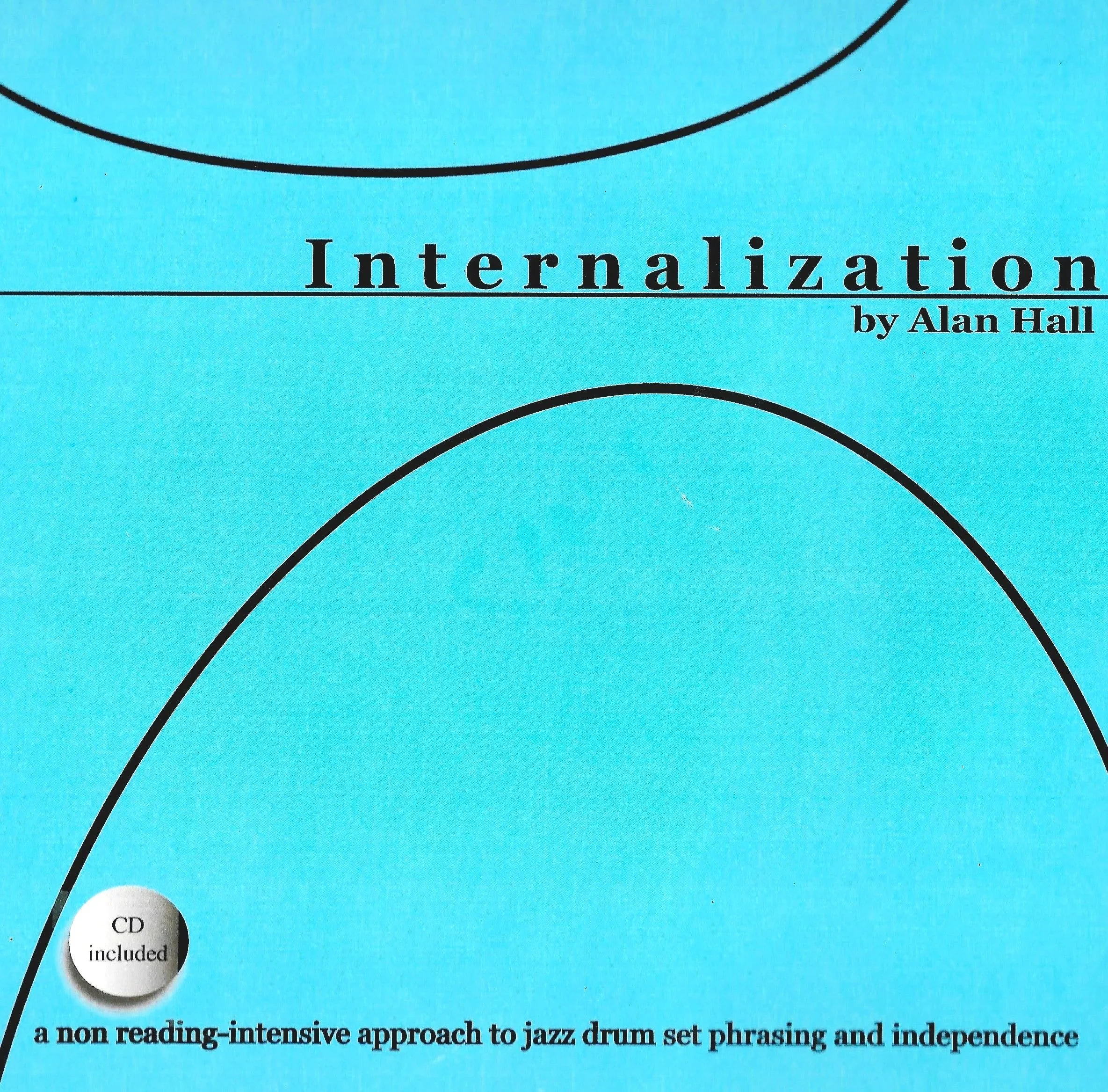
It’s based on a book I wrote, updated and improved upon in my studio over years entitled, “Internalization”.
Did you know…
….quick videos on Instagram. Facebook and Youtube with which you can try out the concept.
All free. All real jazz drumming “language” you can hear used today by the best jazz drummers, as well as by past greats.
_____________________
Check It Out!
If you’re not thrilled with the prospect of reading through page after page of drum notation, you might wanna check out these videos.
If you’ve accumulated piles of drum books in hopes of improving your jazz drumming-I’ve encountered this phenomenon often-but still feel kinda stuck, you might wanna check out these videos.
This approach is not for all jazz drumming students, but it might be your path to creative growth. I’ve seen it work for countless students. You might be the next one.
I’m excited to share these ideas with whomever is interested. It’s a valid, and proven approach to increasing one’s jazz soloing and comping language.
Have fun with it. I still do!
Thanks for stopping by!
- Alan